
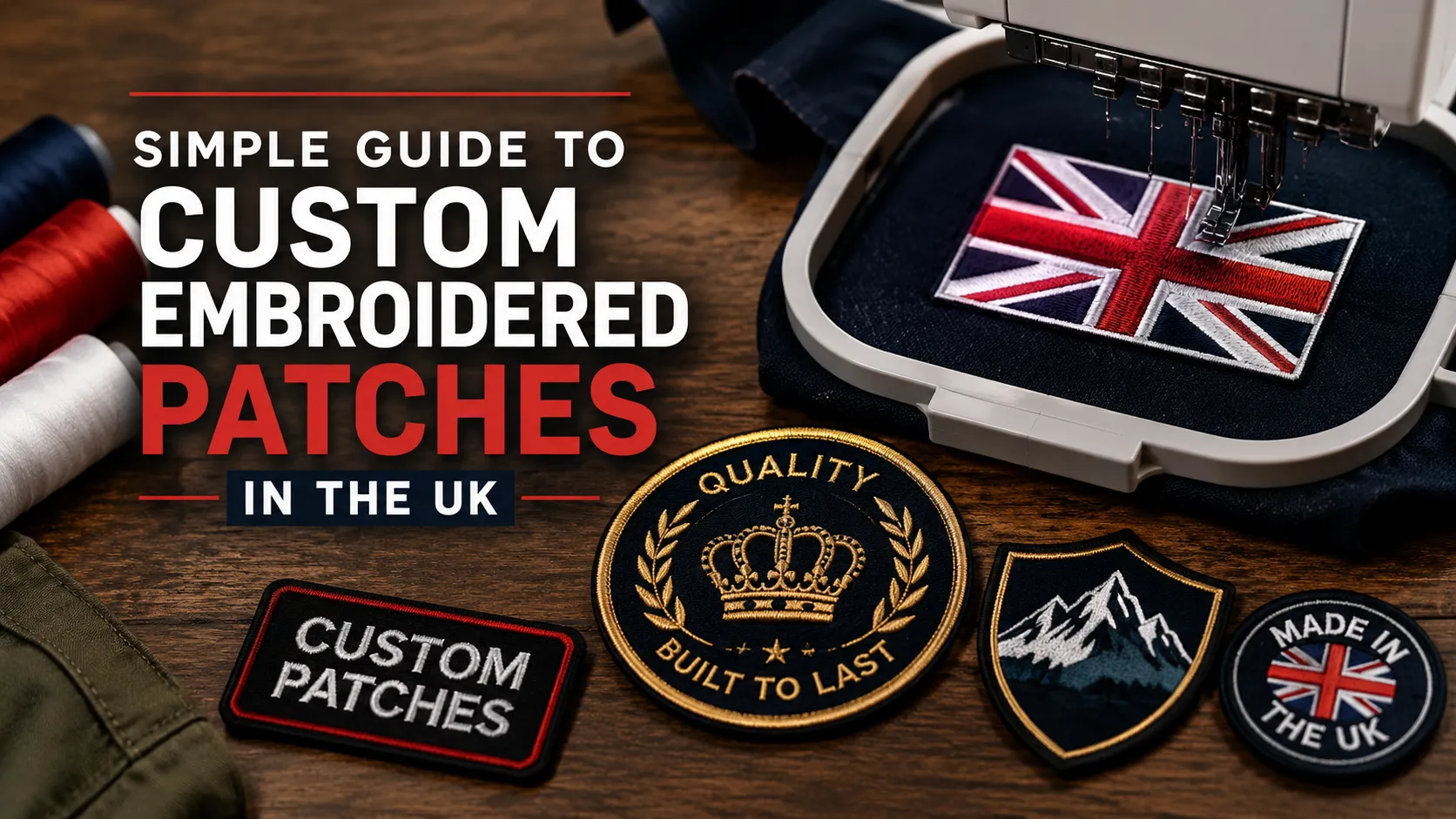
Simple Guide To Custom Embroidered Patches In The UK
Have you ever looked at a neat, colourful patch on club apparel, a scout’s sash, or a work uniform and wondered about how it is made? Most of the time, the answer is the same: an embroidered patch. They are the most popular and recognisable professional patches types in the UK and for good reason: they look brilliant, are hard-wearing, and suit almost any budget.
If you are ordering them for the first time, the choices around thread coverage, backing, borders, and sizing can become a little overwhelming. This blog is a guide to personalised embroidered patches UK and will help you understand everything you know about these patches.
What Are Custom Embroidered Patches?
Custom embroidered patches are made of fabric badges through stitching a design directly onto a base material with coloured threads. You can design a logo, emblem, symbol, text, or badge, all of them tailored to your specific requirements. Printed designs sit flat on the surface, but embroidery patches use threads to create texture and depth. It offers embroidered emblems a raised and tactile finish that appear professionals and lasts over time.
Businesses, organisations, clubs, and individuals are choosing professional patch manufacturers UK for durable patches, classic appearance, and versatility. You can attach personalised emblems to your bags, clothes, hats, and equipment through different backing options that make them suitable for both permanent and removable use.
What Are The Features Of Custom Embroidered Patches
There are various types of custom patches, but embroidered patches stand out among all due to their features.
● A Stitched And Textured Finish
When you use embroidery threads, they give a bold and high-quality appearance of professional patches. Designing logos and lettering can make them clear and slightly raised, helping your design stand out on uniforms and garments.
● Strong And Long-lasting
Embroidered patches are popularly known for their durability. If they are made properly, they can withstand frequent washing, wear, and outdoor use without losing their shape and colour.
● Traditional And Professional Appearance
Most of the companies prefer embroidered patches as they feel trustworthy and established. This is the reason they are commonly used on various accessories and garments like uniforms, branded apparel, and workwear.
Other patch types like woven, printed, or PVC have their own benefits, but embroidery is the go-to choice when you need texture, strength, and a premium finish the most.
The Designing Process Of Custom Embroidered Badges
Finished patches might be simple, but there is a careful process behind each design to make it look right, wear well, and meet its intended purpose. Here is a step-by-step process on how to make custom patches UK.
1. Design And Artwork Preparation
The process starts with the design, and it could be a company logo, text, or custom illustration. You may need to convert it into a digital format or make some adjustments. Choose thread colours using an embroidery thread chart instead of screen colours so that they match closely to your branding.
2. Digitising The Design For Embroidery
In this process, the design is transformed into a digital embroidery file which tells the machine how to stitch the patch. This step is crucial for clean lines, a professional finish, and solid coverage.
3. Choosing The Base Fabric And Border
Most personalised embroidered patches UK use fabric like twill or felt, offering a smooth surface. Choose the right border: merrowed for thick edges and classic shapes, and laser-cut for custom shapes and sharper edges.
4. Selecting The Patch Backing
Choosing the right backing is important, and it depends on where and how it will be used. Iron-on is for easy application, sew-on for permanent attachment, and hook-and-loop for removable patches.
5. The Embroidery Process
The embroidery machine now follows the digitised file and starts stitching the design with coloured threads. The total stitch count depends on the size and complexity of the design. Best patch makers often use higher counts for better coverage and a premium feel.
6. Cutting, Finishing, And Quality Checks
Once you have finished the embroidery process, cut the final shape through laser cutting or manual trimming. Apply backing material and check the quality for clean edges, secure borders, accurate colours, consistent stitching, and correct backing application.
Common Uses Of Custom Embroidered Patches In The UK
There is a wide range of industries and communities who are using custom embroidered patches. Their flexibility is suitable for decorative and practical purposes.
● Business Branding And Workwear
People use embroidered patches on uniforms to display a company name or logo. Hospitality staff, delivery drivers, tradespeople, and security teams often use embroidered badges for a smart and consistent look.
● Military, Tactical, And Morale Use
Military units, cadets, emergency services, police teams, and airsoft groups are widely using embroidered patches. They are best for showing unit identity, rank, and morale messages and hold up well in demanding conditions.
● Clubs, Schools, And Organisations
Scout groups, schools, sports clubs, and charities are using embroidered patches to represent achievements and memberships. People collect badges, worn with pride, and use them for recognition or fundraising.
● Fashion And Accessories
Embroidered emblems have become popular in fashion and streetwear, from caps and jackets to tote bags and backpacks. They can add personality and individuality to everyday items.
Frequently Asked Questions
1. Can I machine wash embroidered patches?
Yes, embroidered badges are the most hard-wearing patch types, and they can cope well with regular machine washing, especially when sew-on and not iron-on. You can get the best results by washing at a moderate temperature, turning the garment inside out, and avoiding tumble drying on high heat. A sew-on embroidered patch can outlast the garment it is attached to.
2. What is the difference between embroidered and woven patches?
Embroidered patches are made with thicker thread stitched on top of a twill base that offers a raised and textured look. Woven patches are crafted with much finer threads, which are woven together to form a whole patch that can capture smaller text and fine details with a flat and smooth finish. Embroidered badges will look more traditional and tactile, while woven patches are better for intricate logos.
3. Which type of backing should I choose for custom embroidered patches?
Choosing the type of backing depends on the use of custom embroidered patches. Iron-on is a quick and easy solution for low-wash items. Sew-on is the most durable for kits and uniforms. Velcro is best if you want to swap patches between garments or gear. If you have any doubts, sew-on is the safest all-round choice for anything that allows you heavy use.
Final Thoughts
Custom embroidered badges are one of the most versatile and reliable ways for expressing personal identity, branding, and creativity. Strong and long-lasting construction, structured and textured finish, and traditional and professional appearance make it stand out among other types of patches.
The designing process involves artwork, digitising the design, and choosing the fabric and border style. Then patch manufacturers UK need to choose the patch backing, do the embroidery, and end with cutting, finishing, and quality check. The common uses of embroidered badges include business branding and workwear, military and morale use, clubs and school uniforms, and fashion accessories.

I am Emma Wilson. I love sharing ideas about custom designs and creative projects. I write simple guides, tips, and helpful articles about embroidered patches to help people find new ideas and learn more about patch designs.